The Lesson at the Naval Observatory
usapolitics.news Analytical Journalism
Reading time: 5 minutes
"Vance, the convert, plays the theologian with Pope Leo and celebrates the war that liberated the camps." — Corriere della Sera
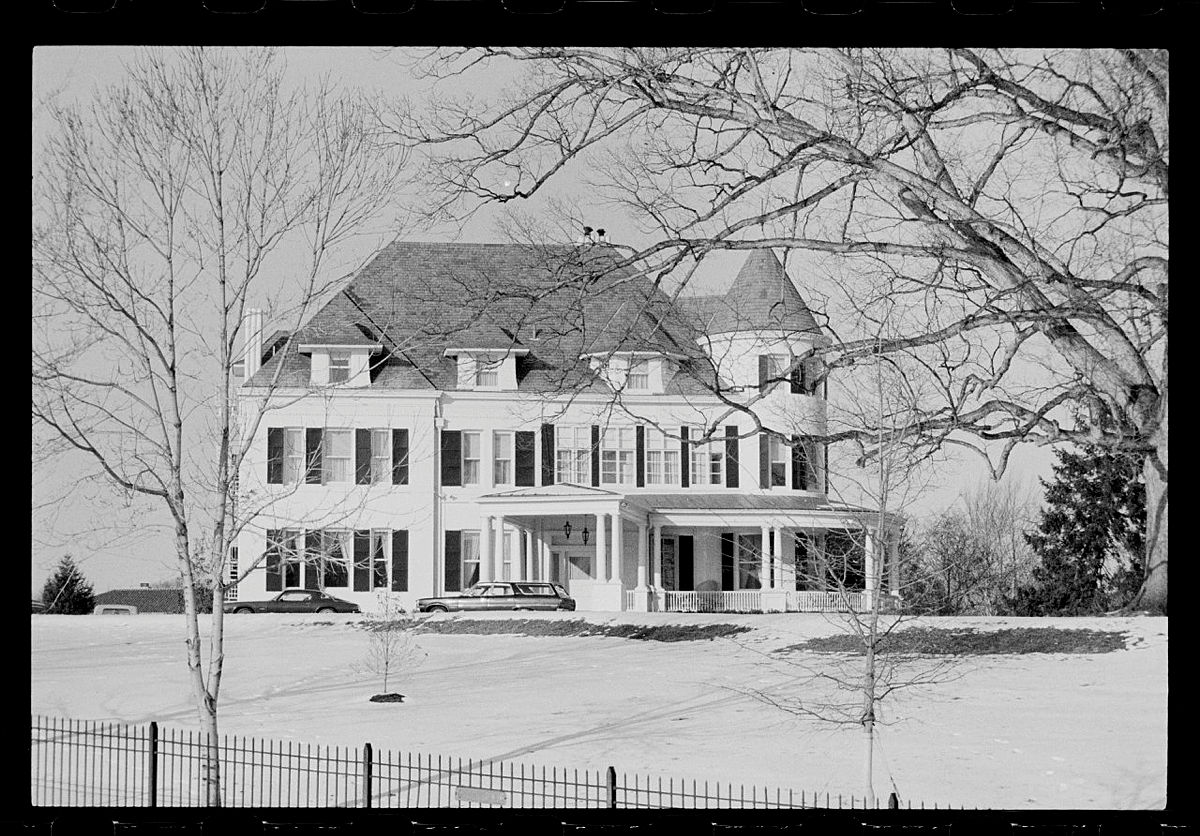
There is a lesson that lives at the Naval Observatory, the vice president's residence on the grounds of a nineteenth-century park in northwest Washington: the lesson of Mike Pence. Pence lived there too, during Trump's first term — exceptionally loyal across four years, until he did the one thing the arrangement cannot tolerate: defaulting, once, to the Constitution rather than the man.
JD Vance has studied that lesson carefully — he said so explicitly, telling ABC News he would not have certified the 2020 results had he been in Pence's position. It is the key to understanding almost everything he has done in public life since January 2025, and it is the key to understanding what happened in April, when the sitting vice president of the United States traveled to Athens, Georgia, to instruct the head of the Catholic Church to be more careful with theology.
The confrontation with Pope Leo XIV had been building for weeks. The pope, who as a cardinal had publicly criticized the Trump administration's immigration policies — writing on social media that "JD Vance is wrong: Jesus doesn't ask us to rank our love for others" — escalated his criticism as the Iran war intensified. When Trump threatened in early April that "a whole civilization will die tonight" if Iran did not come to the negotiating table, Leo called the remark "truly unacceptable." Trump responded on Truth Social by calling the pope "WEAK on crime, and terrible for Foreign Policy." He then posted an AI-generated image depicting himself as a Christ-like figure. After deleting it following bipartisan criticism, he posted a second image the following day — Jesus embracing him, an American flag filling the background, the caption reading: "perhaps God is playing his ace in the hole."
Into this exchange stepped Vance, a convert to Catholicism who has cited his faith as central to his public identity. His position was careful, almost legalistic. He said he liked that the pope was "an advocate for peace." He acknowledged that reasonable people could disagree about whether a given conflict was just. But he drew a firm line: the pope was failing to adequately consider conflicts like World War II, and was therefore speaking imprecisely on theological grounds. "Was God on the side of the Americans who liberated France from the Nazis?" Vance asked. "I certainly think the answer is yes."
There is also the question of what Vance's argument implies about the people in those camps before the Americans arrived — years during which the machinery of extermination ran without interruption, largely beneath the notice of the Christian world. The theology cuts in more than one direction.
The Corriere della Sera, Italy's newspaper of record, identified what the English-language press had largely passed over. The Pence factor, the Corriere argued, must weigh heavily in Vance's calculations. Pence's career ended the day his conscience diverged from his principal's. A faith that instructs the pope to remain in his lane is a faith that will never require its holder to step outside his. "He is betting the base will forgive him for renouncing the pope," the Corriere concluded, "because they would never forgive him for renouncing Trump."
The Corriere also identified the deeper doctrinal problem. Vance converted to Catholicism at thirty-five, but his theology was formed earlier — in the Presbyterian hill country of Ohio and Kentucky. When he told the pope that God was on the side of American military force, he was not speaking as a Catholic. He was speaking as a Calvinist who had changed his denominational affiliation.
Senate Majority Leader John Thune, a fellow Republican, was unimpressed. Asked about Vance's comment that the pope should be careful when discussing matters of theology, Thune replied: "When he talks about matters of theology? Isn't that his job?"
Two months after that exchange, Vance published a 304-page book about his personal journey to Catholicism. Communion: Finding My Way Back to Faith traces his path from the Protestant Christianity of his Ohio youth through a period of atheism and Ayn Rand — "I didn't care about God's will," he writes. "I cared about my own" — to his conversion in 2019. The Associated Press described it as "a manifesto for the role of religion in public life." Presidential historian Douglas Brinkley compared it to a pre-campaign memoir — faith as a calling card, released early enough to introduce a candidate to voters who do not yet know him well.
On June 25, Vance promoted the book at the Richard Nixon Presidential Library. There, he told the audience that Nixon's legacy was "enjoying a bit of a renaissance" — and that Watergate, had it happened today, would have been a twelve-hour news story. The idea that it brought down a presidency, he said, was crazy — an observation that, for anyone paying attention, doubled as a campaign promise.
The book arrived on June 16, two days before the midterm election cycle unofficially begins and nine months before Vance is widely expected to announce a presidential campaign. The cover depicts Mt. Zion United Methodist Church, a rural Virginia congregation with no connection to Vance or to Catholicism. The publisher has not explained the choice. On Goodreads, the book carries a 1.27-star rating from its first readers.
The timing places it in uncomfortable proximity to events it cannot have anticipated but cannot now escape. A vice president who published a memoir about the sincerity of his Catholic faith did so in the same week that the administration he serves was working toward a peace agreement with Iran — a war the pope had condemned, whose conduct the pope had called incompatible with Christian moral teaching, and whose civilian toll Vance had defended before a political rally by invoking the liberation of Nazi concentration camps as a counter-example.
By avoiding the Pence trap, Vance is sending a signal not to Catholic voters but to the broader Republican electorate. He wants to be seen as commander-in-chief in waiting, not merely as vice president. If the Iran war is judged a success by 2028, his refusal to bow to the Vatican will be read as strength. He has backed Trump on Iran without reservation, constructing the image of a war leader — and he knows that Rubio can afford his silence because the secretary of state has a structural excuse: he is visibly occupied with the diplomacy between Israel and Lebanon.
It is a bet with a specific mechanism and a specific date. Vance is wagering that Trump's personal brand currently carries more weight with Republican voters than the moral authority of the pope — and that it will continue to do so in the summer of 2028, when the primaries arrive. The November midterms will render the first verdict. If Republicans hold the House, Vance will be seen as having correctly identified that Leo XIV — the first American pope — carried less influence than everyone assumed. If the party loses ground in Catholic-majority districts, he becomes the man who broke the coalition — and 2028 becomes an open race.
Pope Leo XIV, for his part, shows no sign of taking the advice.
Sources
- Corriere della Sera, "Vance, il convertito, fa il teologo con papa Leone e celebra la guerra «che liberò i lager»"
- NBC News, "Vance warns the pope should 'be careful' when talking about theology" (April 15, 2026)
- The Hill, "JD Vance, Tom Homan warn Pope Leo XIV on politics" (April 16, 2026)
- Lowy Institute, "Two months in, what has Pope Leo XIV signalled as his foreign policy agenda?"
- Diocese of Scranton, "Vatican confirms pope will not visit U.S. in 2026"
- Associated Press / National Catholic Reporter, "JD Vance writes of journey to Catholicism in 'Communion'" (June 15, 2026)
- Catholic Review / OSV News, "'Communion': JD Vance's spiritual memoir released as 2028 race heats up" (June 15, 2026)
- Daily Beast, "JD Vance Humiliated With Brutal One-Star Review for 'Communion'" (June 16, 2026)
- Goodreads, Communion: Finding My Way Back to Faith, reader reviews
- Wikipedia, "Communion (Vance book)"
- Wikipedia, "Hillbilly Elegy"
- Britannica, "JD Vance"